The Most Important Legacy of 'The Legend of Korra'
A tiny moment in the season premiere of the new 'Avatar' show speaks to the quiet legacy of its predecessor when it comes to LGBTQ representation in animation.
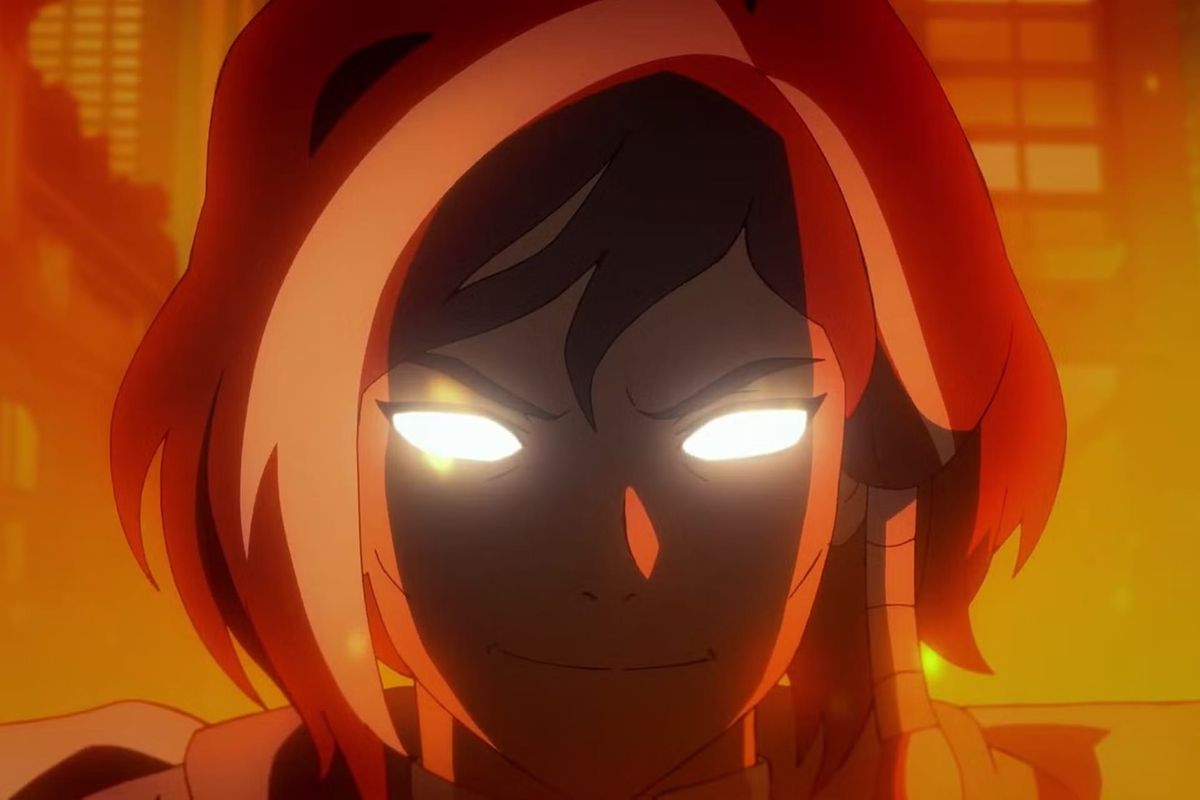
A running theme that now ties together the Avatar universe is that the current Avatar is usually dealing with the consequences of their predecessor's actions. Aang directly challenged Roku's inaction to prevent Sozin from leading the Fire Nation into an expansionist conflict that ravaged the world for over a century. Korra inherited the work Aang and his friends had done to establish a multinational society in Republic City, as well as deal with the spiritual world Aang had ultimately neglected to bridge with the physical realm.
Now, twelve years after The Legend of Korra came to an end, we have a new Avatar series, Seven Havens, which premiered this past week. On the surface, the problems new twin Avatars Pavi and Nisha are grappling with when it comes to Korra are very literal: centuries after the events of Legend of Korra, the world has been ravaged by a cataclysm seemingly caused by the past Avatar, and splintered into a barren world where the titular seven havens of humanity have grown isolated and bitter of the Avatar as a mantle.
But I'd argue that that is not really the legacy Korra has already brought into Seven Havens in its first three episodes. Sure, it's going to be an ongoing mystery of the series to unravel what really happened with the cataclysm and Korra's part in it, but her real impact has already been felt in the show beyond this mystery and the world set up around it. Instead, it's been felt in a much smaller, yet infinitely more meaningful way:
A simple kiss between a man and his boyfriend.